Article
Two thirds want to book their workshop appointment online, only one third can
Cars come in for repairs less often, and customers compare more closely. If you can’t be reached digitally, you don’t even get asked. In five charts, I show what workshop customers expect, where workshops stand and where to start.

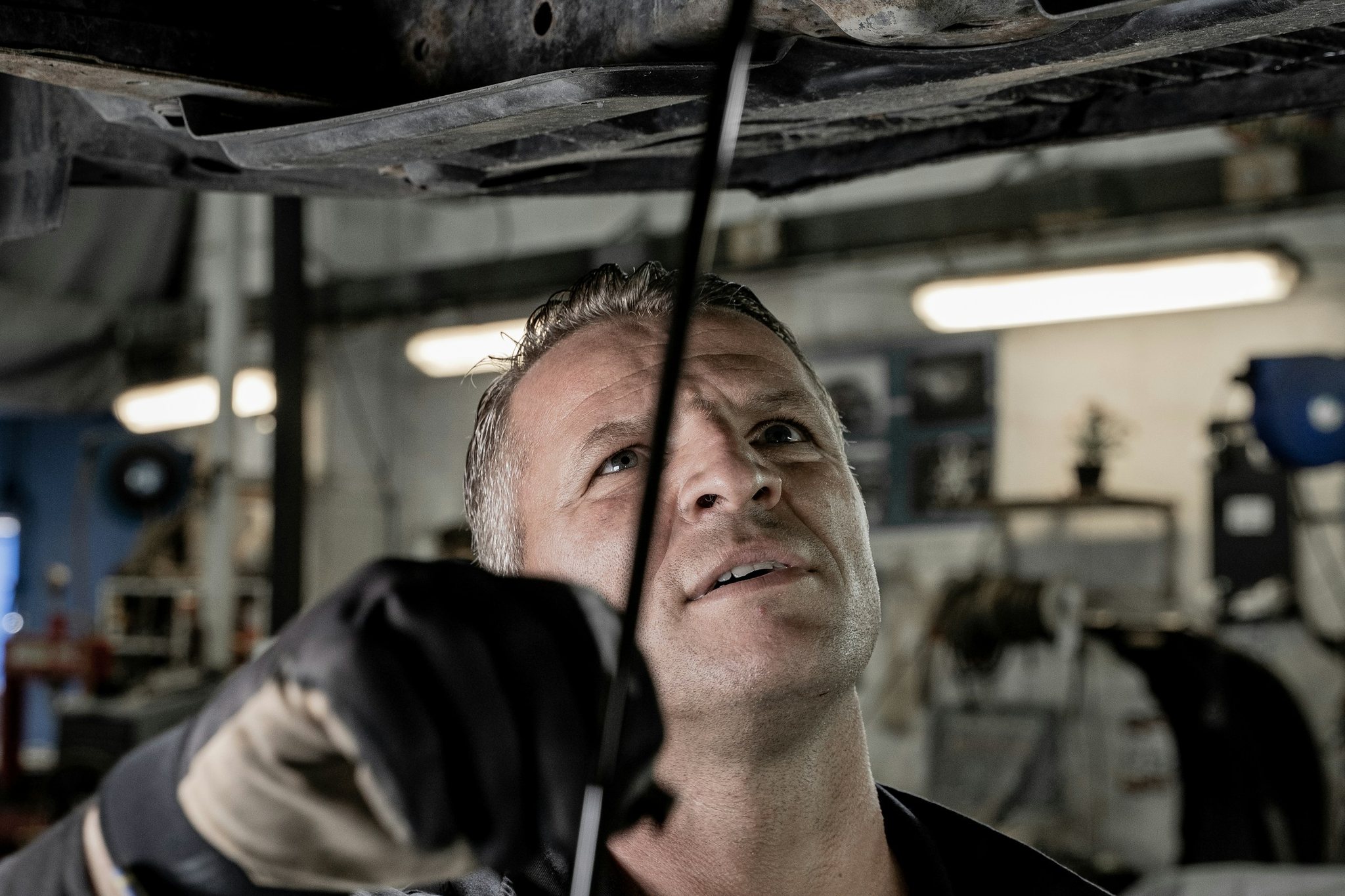
The phone rings while both hands are deep in an engine bay. By the time someone calls back, the job has often gone elsewhere. That’s how it goes in many workshops every day, and it’s rarely a lack of will. What’s missing is a second way for customers to reach the workshop without anyone having to stop working.
That’s exactly what many customers want. Two current studies from Germany show quite clearly what they expect and what workshops offer today.
Customers want more than workshops offer
For DEKRA’s after-sales study, the research institute Ipsos surveyed around 1,000 people in Germany in June 2026 who take care of their car’s maintenance and repairs themselves. Around two thirds would like to book their workshop appointment on the website. According to the respondents, only one third of workshops make that possible. Other digital services show a similar picture.

Things are moving, but slowly. In 2022, 26 % of respondents could book online with their workshop; in 2026, it’s 33 %. And only 21 % now feel their workshop is poorly prepared for contact via the internet, email or WhatsApp. Two years earlier, it was 32 %.
Every repair job is worth more
At the same time, business is getting tighter. According to the DAT Report 2026, there were only 0.35 repairs per car on average in 2025, down from 0.51 in 2019. Maintenance stays stable at around one visit a year. Both have become more expensive: a repair cost 604 € on average in 2025, a service 542 €. That’s 30 and 27 % more than in 2020.

Almost 60 % of respondents have changed their behavior because of the costs. Most only have the bare minimum done, ask friends for help or look specifically for workshops that do certain repairs for less. For workshops, that means every repair job gets compared more closely. If you’re hard to reach, you drop out before price or quality even come up.
Appointments and reachability are the biggest issues
Loyalty to one’s own workshop is high. Still, about half of respondents see room for improvement, according to the DAT Report. For customers of independent workshops, it’s mostly about faster appointments, followed by friendlier service, opening hours and how easy it is to get in touch. At brand dealerships, the picture is similar.

Digital processes won’t give you an extra lift. But they take pressure off the phone, let customers request an appointment after hours and help you plan the workshop better.
Digital where it saves time. In person where it takes trust.
Going digital doesn’t mean everything has to run through an app. The DAT Report asked for the first time which steps of a workshop visit respondents could imagine in digital form. For booking and aftercare, about a quarter can. For all other steps, they want contact with people from the workshop.
That doesn’t contradict the DEKRA study. Customers want digital channels in addition to people, not instead of them. That makes for a simple division of labor: whatever takes time and needs no advice runs digitally. Whatever takes trust stays at the car.

An example from my work
At Timeless Motors, a car repair and paint shop in Wiesloch, the digital part starts before the first contact. Meta ads for individual services such as underbody protection or US cars lead to a short form right inside Facebook and Instagram. Every inquiry lands automatically in the CRM, with a status, an owner and the cost of the ad. Open inquiries get followed up with dedicated campaigns.

New ads, a new website and the process behind them work together here; their individual shares can’t be separated. What’s certain: every inquiry has a status and an owner, even when nobody has time for the phone.
Where to start
You don’t have to change everything at once. Across the skilled trades in Germany, 72 % of businesses say they’re too busy to deal with digitalization, according to Bitkom. So start with the three steps that save the most phone time:
- Online appointment requests and a Google profile. A short form on your website asks for the vehicle, the issue and a preferred date. Add a well-kept Google profile with opening hours, services and reviews. That way, customers can get in touch after hours, too.
- One channel for questions. WhatsApp Business, for example, with your customers’ consent and fixed response times. A photo of the damage often saves a long phone call.
- Reminders from your customer records. A message before the statutory inspection, the service or the tire change brings regular customers back before they start comparing. According to DEKRA, 56 % would like an overview of these dates, but only 17 % get one.
I build exactly this for workshops and other trade businesses: websites with appointment requests, a CRM with WhatsApp and, if you like, Meta ads that bring in the jobs you actually want. If you want to know where to start, get in touch.
Sources
- DEKRA (2026): Digitaler Service: Autobesitzer bescheinigen Werkstätten Fortschritte (press release on the DEKRA and Ipsos after-sales study, 1,000 respondents, June 2026), 18 August 2026 (in German). dekra.at
- DEKRA & Ipsos (2026): After-Sales-Studie 2026, fact sheet on digitalization in the motor trade (in German). dekra.de
- DAT (2026): DAT Report 2026, short report (in German). Survey by NIQ GfK, workshop section with 2,068 private car owners, October 2025. dat.de
- Bitkom (2025): Handwerk: Azubis machen Betriebe fit für die Digitalisierung (trainees help trade businesses go digital), press release of 28 August 2025, 504 trade businesses surveyed (in German). bitkom.org